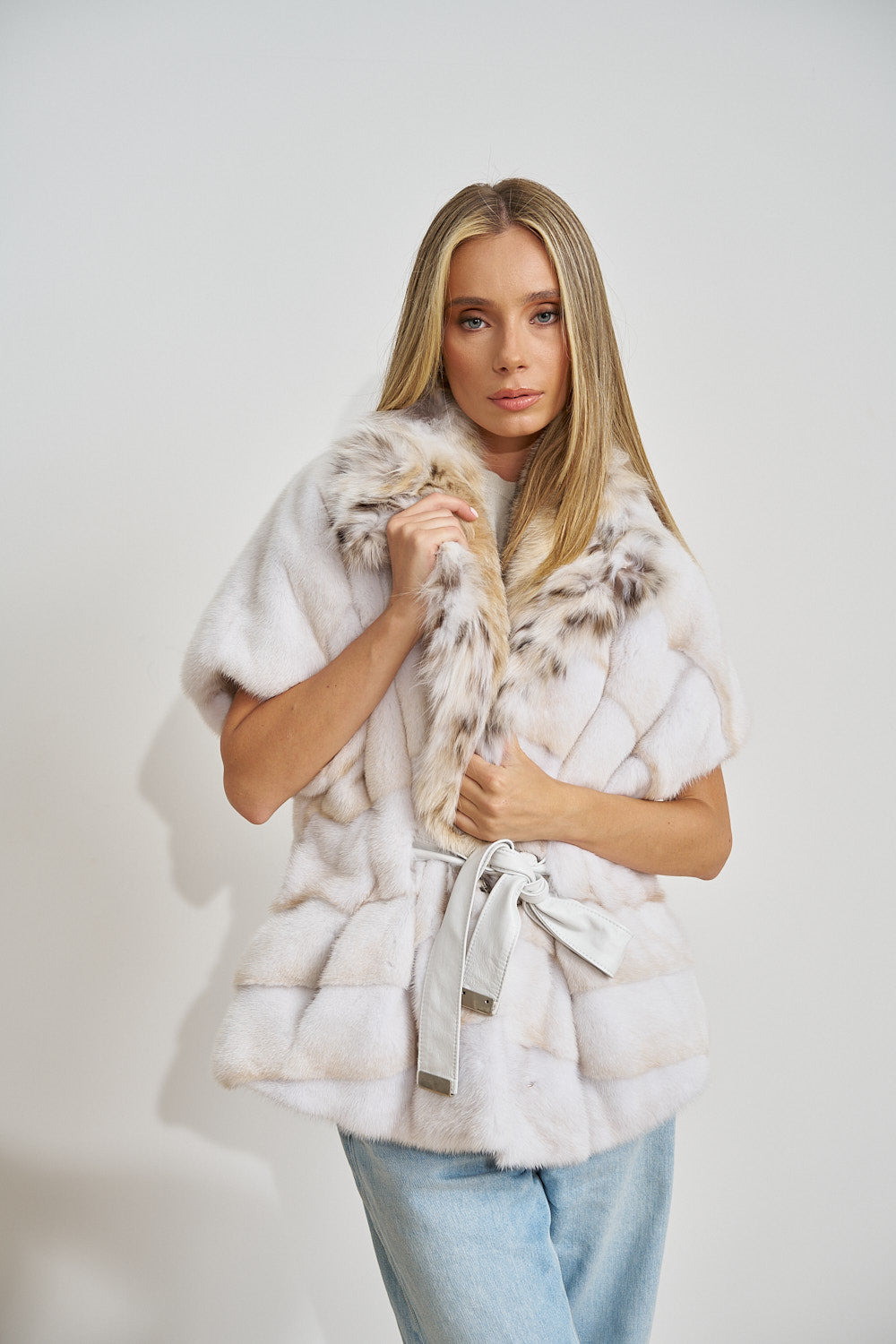
Capsule wardrobe: How to build it step by step
A full closet does not automatically result in more outfits. Often, you end up wearing the same few clothes, while the rest remain unused because they don't match each other, aren't suitable for your activities, or simply don't feel comfortable.
A capsule wardrobe is a curated selection of compatible clothes, tailored to your lifestyle, the season, and your personal preferences. The goal is not to adhere to an arbitrary number, but to get more combinations out of pieces you wear frequently. This structure can include investment pieces, without requiring that all your clothes be expensive.
What is a capsule wardrobe

The principle behind the concept
The concept of a capsule wardrobe starts with compatibility. Each piece must be able to be worn with several others and serve real-life activities, such as going to the office, commuting, meetings, or leisure time.
You can build a single wardrobe for the entire year or separate capsules for each season. The number of clothes will depend on the climate, profession, laundry frequency, the need for variety, and personal style.
Capsule wardrobe versus minimalist wardrobe
A minimalist wardrobe primarily focuses on reducing quantity. A capsule wardrobe emphasizes how the pieces work together, even if the final selection is not very small.
It can be colorful, feminine, classic, or creative. Beige, white, black, and gray are easy to combine, but they are not mandatory.
What benefits does it offer
A well-organized selection can provide several practical advantages:
-
you spend less time choosing outfits;
-
you reduce impulsive purchases and the number of items worn only once;
-
you identify the actual gaps in your closet more easily;
-
you achieve a more coherent personal image;
-
you can gradually invest in quality clothing;
-
you use the pieces you already own more efficiently.
These benefits do not guarantee the elimination of shopping or immediate savings. The results depend on how realistically the selection is built and on your buying habits.
What an investment piece means

Price is not the only criterion
An investment piece is not automatically the most expensive item in the closet. It must be worn frequently, fit your lifestyle, and be able to be paired with what you already own.
A premium product bought for a single occasion may have less practical value than an affordable item worn weekly. A clothing investment should be evaluated by use, not by brand status or notoriety.
Material, tailoring, and construction
Check the composition percentages, material density, lining, seams, buttons, and zippers. The presence of a natural fiber alone does not guarantee quality, as fiber selection, processing, and product construction also matter.
Try the garment on while moving and, if possible, together with the layers you will wear over or under it. A cut that is successful for one person may be uncomfortable or disproportionate for another.
Real versatility
Before buying, formulate at least three outfits using clothes and accessories you already own. Also consider the contexts in which you will wear the product: office, weekend, meetings, travel, or events.
Versatility does not just imply neutral colors. A burgundy coat or a dark green blazer can be easily integrated if the shade is part of your personal palette.
Cost per wear
Cost per wear is calculated by dividing the product price by the estimated number of uses. For example:
-
a 2,000 lei coat worn 100 times costs 20 lei per wear;
-
a 300 lei piece worn twice costs 150 lei per wear.
The calculation is a guide, not an automatic justification for a high price. The estimate must be realistic and take into account comfort, maintenance, and concrete pairing possibilities.
How to build your capsule wardrobe step-by-step

Analyze your lifestyle
Look at a typical week and note how much time you spend at the office, commuting, at meetings, during social activities, and at home. The proportion of clothes should reflect these contexts.
A person working remotely does not need the same structure as someone who attends corporate meetings daily. Build the wardrobe for the life you have, not for an idealized version of it.
Evaluate what you already wear
Take your clothes out of the closet and group them into four categories:
-
worn frequently;
-
worn rarely;
-
unsuitable in terms of size, cut, or style;
-
pieces that need adjustments or repairs.
Analyze why you return to certain items. The reasons could be the cut, comfort, color, or ease of pairing. Do not immediately remove everything that doesn't fit the new selection, as some clothes may become useful after an adjustment or in another season.
Define the color palette
Choose two or three base colors and one or two accent shades. Navy, gray, brown, camel, cream, and black are common bases, but the selection must start from the clothes you enjoy wearing.
For accents, you can use burgundy, dark green, petrol blue, or other colors that suit your complexion and existing wardrobe. The palette creates compatibility without becoming a restrictive rule.
Choose the right cuts
Identify the trouser, skirt, dress, blazer, and coat shapes you consistently choose. Prioritize proportions, comfort, and freedom of movement, not merely whether the cut is trendy.
A tailor can adjust the sleeve length, hem, or waist of a well-chosen garment. Sometimes, a small modification transforms a rarely worn piece into a useful one.
Identify the real gaps
The shopping list must be created after the wardrobe evaluation. A real gap might be a coat compatible with most outfits, office-appropriate trousers, or shoes suitable for daily commuting.
Ask yourself if the product solves a repeated need or just responds to a trend or a temporary discount.
The staples of a capsule wardrobe

The following list is a guide. Not all pieces are relevant to every woman, and the selection must be adapted to your profession, climate, and personal preferences.
The coat for the cold season
The coat can be an investment piece because it is visible, worn frequently, and placed over numerous combinations. Check the shoulder position, length, closure system, and space available for a blazer or knitwear.
The right shade is the one that complements the existing wardrobe. In the selection of Mareus cashmere and wool coats, each model can be evaluated based on composition, cut, construction, and compatibility with layers usually worn.
The leather jacket
A leather jacket with a clean design can be used between seasons alongside jeans, tailored trousers, skirts, or dresses. The cut should allow for movement and remain relevant to your style for more than one season.
Before choosing from the Mareus women's leather jackets, check the length, leather weight, lining, and how the piece fits over a top or a thin knit.
The blazer
The blazer can transition from office outfits to business casual or weekend combinations. Shoulders, sleeve length, and proportion relative to trousers or skirts are more important than choosing a popular cut.
A neutral color is simple to combine, but an accent-colored blazer can also be versatile if it respects the established palette.
Trousers and jeans
One or two cuts suitable for your activities can cover most outfits. Check if the trousers work with several types of footwear and if they maintain their shape after wearing.
For jeans, a uniform color and simple finish are easier to integrate. However, the model should be chosen primarily for comfort and proportions.
The skirt and dress
Include skirts and dresses only if you actually wear them. Models that can be adapted through footwear, accessories, and layering will offer more possibilities.
A black dress is not a universal requirement. It can be replaced by a navy, brown, colorful, or subtly printed dress if that suits your style better.
Shirts, blouses, and knitwear
Choose staple pieces for layering and one or two variants with personality. Materials worn directly against the skin should be comfortable and climate-appropriate, while intermediate layers must allow for movement under a blazer or coat.
Sweaters and cardigans complete trousers, skirts, and dresses alike. Their thickness should be relative to the climate and available outerwear.
Footwear and accessories
You can include one pair for daily activities, one for the cold season, and one for elegant contexts, provided they all fit your schedule. Bags, belts, and scarves can pick up the main colors or accents of your wardrobe.
Accessories change the look of a combination without the need for constant new clothing purchases.
How many pieces should a capsule wardrobe contain

There is no right number for everyone. A seasonal capsule can start from about 20-30 pieces, excluding underwear, sportswear, and strictly functional clothes, but the figure is just a reference point.
Requirements differ based on climate, activities, laundry frequency, and preference for variety. You can start with a 10-15 piece mini-capsule for a specific context, such as the office or transitional season, and adjust it after a few weeks.
The objective is not to own as few clothes as possible. It is important that the selection is sufficient for your pace of life and offers combinations you wear with pleasure.
Examples of outfit formulas

The same pieces can cover different contexts through small changes:
Camel coat, cream turtleneck, black trousers, and ankle boots: suitable for the office. For dinner, add more visible earrings and replace the day bag with a compact one.
Gray coat, white shirt, dark jeans, and loafers: useful for a day with informal meetings. For lower temperatures, add a thin cardigan between the shirt and the coat.
Leather jacket, midi dress, and ankle boots: suitable for the weekend or a date. Replace ankle boots with elegant shoes for an evening setting.
Blazer, simple t-shirt, straight trousers, and flats: a business casual formula. For a presentation, swap the t-shirt for a shirt and add a well-finished belt.
Fine sweater, midi skirt, boots, and coat: suitable for the office in the cold season. For the weekend, you can replace the coat with the leather jacket if the temperature allows.
Shirt, jeans, leather jacket, and structured bag: useful for commuting and relaxed meetings. Add a colorful scarf to introduce an accent without changing the base of the outfit.
Simple dress, belt, blazer, and elegant shoes: suitable for a professional meeting or event. Remove the belt and swap the shoes for loafers for a more relaxed version.
Cardigan, basic top, tailored trousers, and scarf: suitable for the office or travel. Replace the scarf with a simple necklace to adapt the ensemble for an informal dinner.
How to buy missing pieces without exceeding the budget

Set your priorities
Buy items that complete the most outfits first. Outerwear can take priority if it is worn almost daily and needs to function over dresses, blazers, shirts, and knitwear.
Do not buy all the pieces presented in the "essential" lists simultaneously. Building gradually allows you to observe what you use and what you are truly missing.
Try on in context
Try the garment on with the trousers, footwear, or layers you intend to wear it with. For online shopping, check the size chart, product measurements, composition, cut description, and return policy.
Photographs do not always show the weight, texture, or behavior of the material in motion. Compare the available information before deciding.
Do not buy just because it is on sale
A discount does not transform a useless product into a good choice. Return to your list of gaps and apply the three-outfit test.
If you cannot assign it a clear role and a few real wearing contexts, the reduced price is not a sufficient argument.
How to maintain the wardrobe to extend its use

Maintenance directly influences how long clothes last:
-
follow the instructions on the label;
-
air out pieces that do not need cleaning after every wear;
-
use suitable hangers for coats, blazers, and jackets;
-
keep knitwear folded to avoid deformation;
-
promptly repair buttons, hems, and loose seams;
-
use professional cleaning when the material requires it;
-
properly store wool, cashmere, and leather between seasons.
Do not use the same method for all materials. Leather, wool, and cashmere have different requirements, and improper cleaning can shorten the lifespan of the product.
Capsule wardrobe and slow fashion

The two concepts have common ground but are not identical. A coherent selection can reduce impulsive shopping and encourage the repeated wearing of existing clothes.
Slow fashion also includes questions about production, traceability, materials, repair, and lifespan. A small wardrobe is not automatically sustainable, just as an expensive product or one made from natural fibers cannot be given this label without additional information.
Common mistakes when building a capsule wardrobe

Avoid the following situations:
-
copying a standard list without relating it to your own life;
-
choosing exclusively neutral colors, even though you don't enjoy wearing them;
-
getting rid of existing clothes too quickly;
-
buying all the items considered essential at once;
-
choosing an expensive product just because it is presented as an investment;
-
ignoring the climate and daily activities;
-
building the wardrobe for rare occasions;
-
neglecting repairs and alterations;
-
turning the process into a competition to own as few clothes as possible.
Conclusion

An efficient capsule wardrobe starts with your lifestyle, the clothes you already own, and the combinations you actually wear. Investment pieces should be analyzed based on quality, cut, versatility, and likely frequency of use, not just price.
Build your selection gradually, starting with a mini-capsule for a season or a specific context. As you observe what works, you will be able to complete your wardrobe with more clarity and fewer impulsive purchases.